
Lomax 170 vs 110: Which Low-Profile Tri-Fold Fits Your Truck?
If you’ve narrowed your search to Lomax tri-fold covers, you’ve already chosen best-in-class flush styling and a nearly invisible profile when folded. The question now is whether the 170 or 110 serves your truck bed better.
Both covers share our signature aluminum-panel construction and the same tool-free clamp rail, so installation and weather sealing are identical. The real difference lies in how you plan to use the open bed. We built this guide to walk through each model’s strengths so you can match the right tri-fold to your hauling habits.
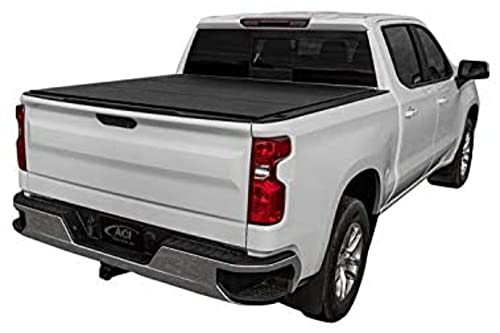
Profile Height and Cab Clearance
The 110 sits 1.25 inches above the bed rail when closed, while the 170 rises to 2.5 inches because of the integrated Load Bar system. That extra inch matters if you tow a fifth-wheel or gooseneck hitch—clearance behind the cab becomes tight with the 170’s rails in place.
Both covers fold to within three inches of the cab window when fully open, leaving nearly the entire bed accessible. If you rarely carry tall cargo and want the absolute lowest closed profile, the 110 delivers that cleaner roofline. Trucks that split duty between towing and daily driving often favor the 110 for that reason alone.
Cargo Management: Load Bars vs. Clean Bed
The 170 includes two removable Load Bars that span the bed width, creating tie-down anchor points every few inches. Each bar locks into the cover’s extrusion tracks, so you can slide them forward or back depending on cargo length.
The 110 offers a completely open bed when the cover is folded or removed—no rails, no hardware interrupting the bed floor. If you haul plywood, drywall, or palletized freight that sits flat, the 110’s unobstructed surface makes loading faster. The 170 trades that simplicity for adjustable restraint points, which shine when securing kayaks, lumber bundles, or any load that shifts during highway driving.
Weight and Single-Person Handling
Each cover ships as a fully assembled unit that one person can lift onto the truck. The 110 weighs 52 pounds; the 170 comes in at 58 pounds with both Load Bars installed.
Removing either cover for the weekend takes under a minute—release four clamps, lift straight up, and store it vertically in the garage. The six-pound difference is noticeable only if you swap the cover on and off every few days. For occasional removal, both models handle the same way.
Retrax Automated Alternatives
Some drivers comparing manual tri-folds also consider retractable canister systems for hands-free operation. Retrax ProXR covers, for example, roll open with a pull strap and require no lifting or folding at all. That convenience comes with a higher price point and a canister that permanently occupies the front eight inches of the bed, so tri-folds remain the choice for budget-conscious buyers who want full bed access when open.

Finish Durability and UV Resistance
Both the 170 and 110 use powder-coated aluminum panels rated for continuous outdoor exposure. The matte black finish resists chalking and fading under direct sun, and we back it with a three-year warranty against peeling or discoloration.
Aluminum’s corrosion resistance is well-documented in automotive and aerospace applications—NIST notes that 5000-series alloys form a stable oxide layer that protects against road salt and humidity. Our panels are formed from 5052 alloy, the same grade used in marine hatches and truck body panels. You’ll see surface scratches if you drag sharp cargo across the cover, but the underlying metal won’t rust or pit the way steel alternatives do over time.
Choosing Between Low Profile and Cargo Flexibility
The 110 wins if you value the lowest possible closed height, unobstructed bed access when open, and a cleaner look without visible rails. It’s the straightforward tri-fold that does one job exceptionally well.
The 170 adds adjustable Load Bars for drivers who strap down shifting cargo—kayaks, ladders, bundled materials—and don’t mind the extra inch of height. That half-inch taller profile is invisible from the driver’s seat but makes a practical difference if you tow with a fifth-wheel hitch.
Both covers install in under twenty minutes with no drilling, and both deliver the same weather seal and theft deterrence. Pick the 110 for simplicity, the 170 for built-in tie-down versatility.
Common Questions About the Lomax 170 and 110
No. The 110 and 170 use different extrusion profiles along the panel edges—the 170’s side rails include the T-slot channels that accept Load Bar ends, while the 110’s rails are smooth and slightly narrower.
Retrofitting would require replacing the entire side rail assembly, which isn’t something we offer as an aftermarket kit. Choose the 170 up front if you think adjustable tie-downs will matter.
Yes. Each cover uses a rotating paddle latch at the tailgate that secures all three panels simultaneously. Turn the key, and internal rods engage strikers in the side rails.
Both models also lock in the two-thirds-open position, letting you secure the rear panel while folding the front two sections forward. The locking hardware is identical between models.
The 170’s Load Bars double as crosswise braces, distributing weight across the panel span. In practice, both covers handle static snow load equally well—the aluminum panels are rigid enough that sagging isn’t a concern below 300 pounds per square foot.
The bigger risk is ice buildup along the hinge lines, which affects any tri-fold regardless of model. We recommend brushing snow off before it melts and refreezes in the seams.
Spray liners add about an eighth-inch thickness to the bed rail surface. Our clamp design accommodates that—tighten the tension knobs until the rubber seal compresses firmly against the liner texture.
Neither the 110 nor the 170 requires drilling into a spray liner. The clamps grip the rail top, so the liner’s sidewall texture doesn’t interfere with installation.
You can fold the rear panel forward as long as nothing taller than 18 inches sits beneath it. The middle and front panels then stack on top of that first fold.
The 170’s Load Bars stay in place when you fold the cover, so gear strapped to the bars will block the fold. Remove straps first, or take the bars out entirely if you need the bed open for taller cargo.
Yes. Each cover channels water through four corner drain ports into flexible tubes that route down the bed stake pockets. The drain system is identical between the 110 and 170.
Both kits include the same length of tubing and the same rubber grommets for the stake pocket outlets.